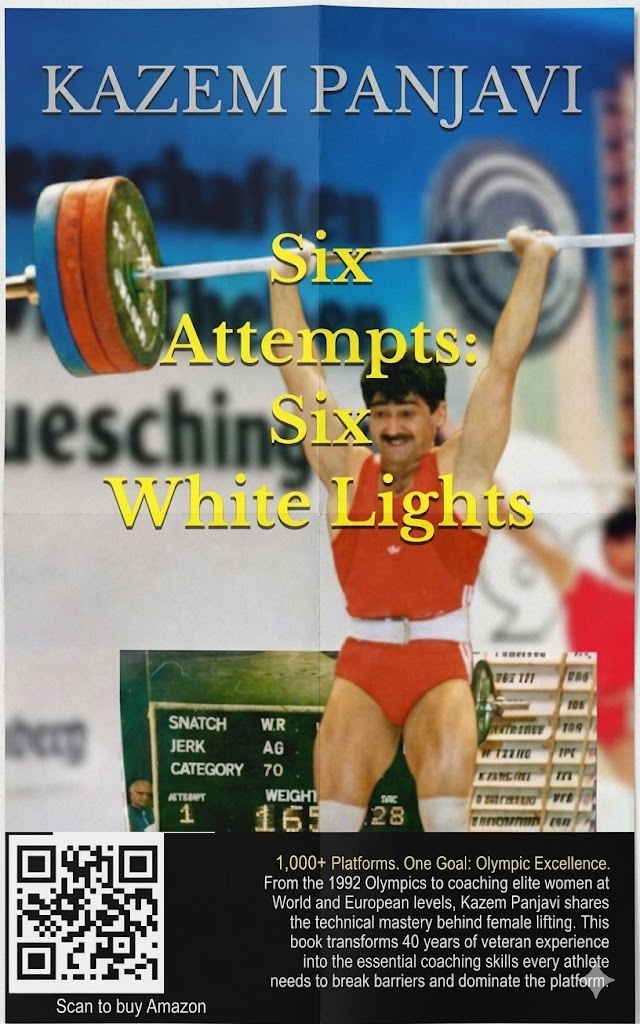
From book to app: How ‘Six Attempts, Six White Lights’ became KAZ Competition IQ
Elite Weightlifting Systems by Kazem Panjavi
Organised four international competitions single-handed, supported by Harrow School and Eleiko — one earned a place on the official IWF calendar.
From Female Olympic Weightlifters to KAZAPP: Experience Turned into Innovation
Everything here was built to solve a problem someone was actually having. Find yours.
You train hard, but the programme ignores how your body feels today — and competitions still feel like a lottery.
You are calling attempts under pressure with no way to practise, and writing programmes that ignore the athlete in front of you.
You need your lifters ready for the real thing, and a proper scoreboard when you run the event yourself.
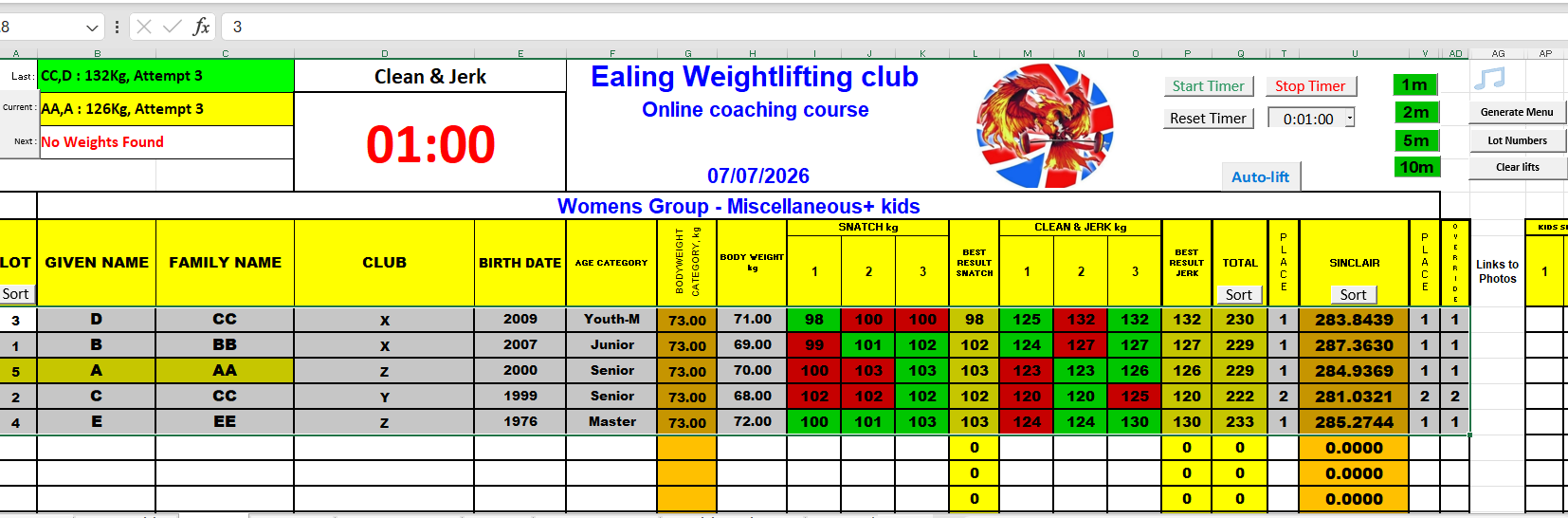
Olympic Weightlifting Scoreboard Software
Most coaches only learn attempt selection by getting it wrong on competition day — at the cost of their athlete's result.
Practise calling weights, warm-up timing and reacting to a rival's change — as many times as you need, before any of it counts. Those calls become trained instinct instead of guesswork.
Step onto the platform having already felt the clock, the lifting order and the referee lights. Nothing on the day is happening to you for the first time.
Built by an active IWF International Technical Official — the referee logic is the real thing.
A spreadsheet written weeks ago does not know you slept badly, and it will still tell you to hit the number.
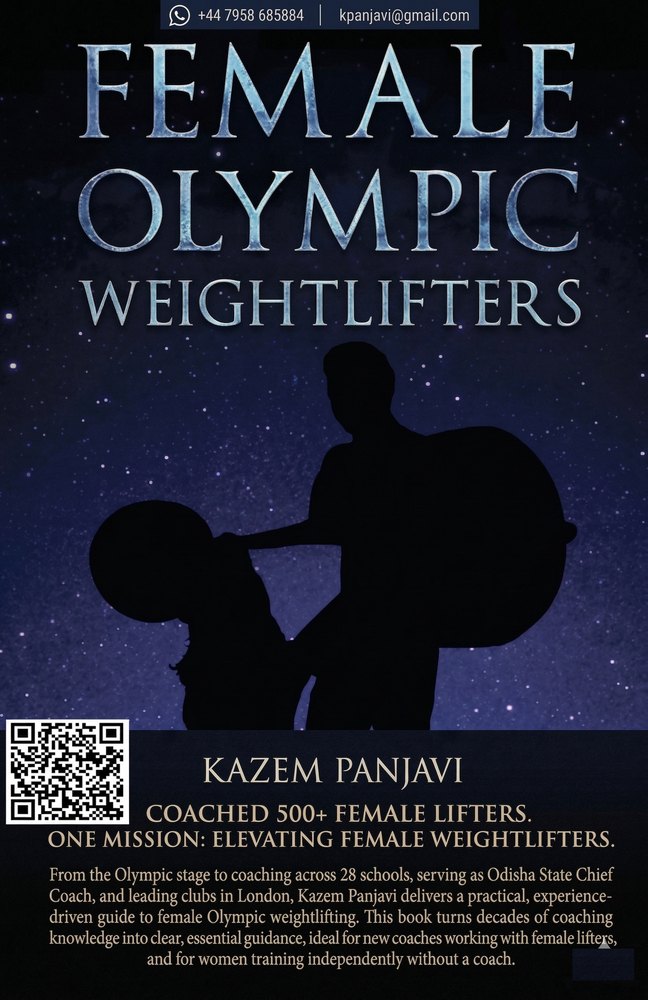
Female programming built on a multi-year study of 100 elite female lifters.
By the time a lifter watches the video back, they have already done three more reps the same wrong way.
Designed across 35 years of coaching and more than 1,300 athletes.
Three books written from one rare vantage point — Olympian, national team coach, national record holder and international technical official. Together they cover the tactics of the platform, the science of the female athlete, and the first step for every new competitor.
Lifters train perfectly for months, then lose on the day — because nobody taught them how a competition actually works.
Almost every strength manual on the market was built on research done on men, then handed to women anyway.
You love the sport and you want to compete — without your first platform feeling like a room full of rules nobody explained.
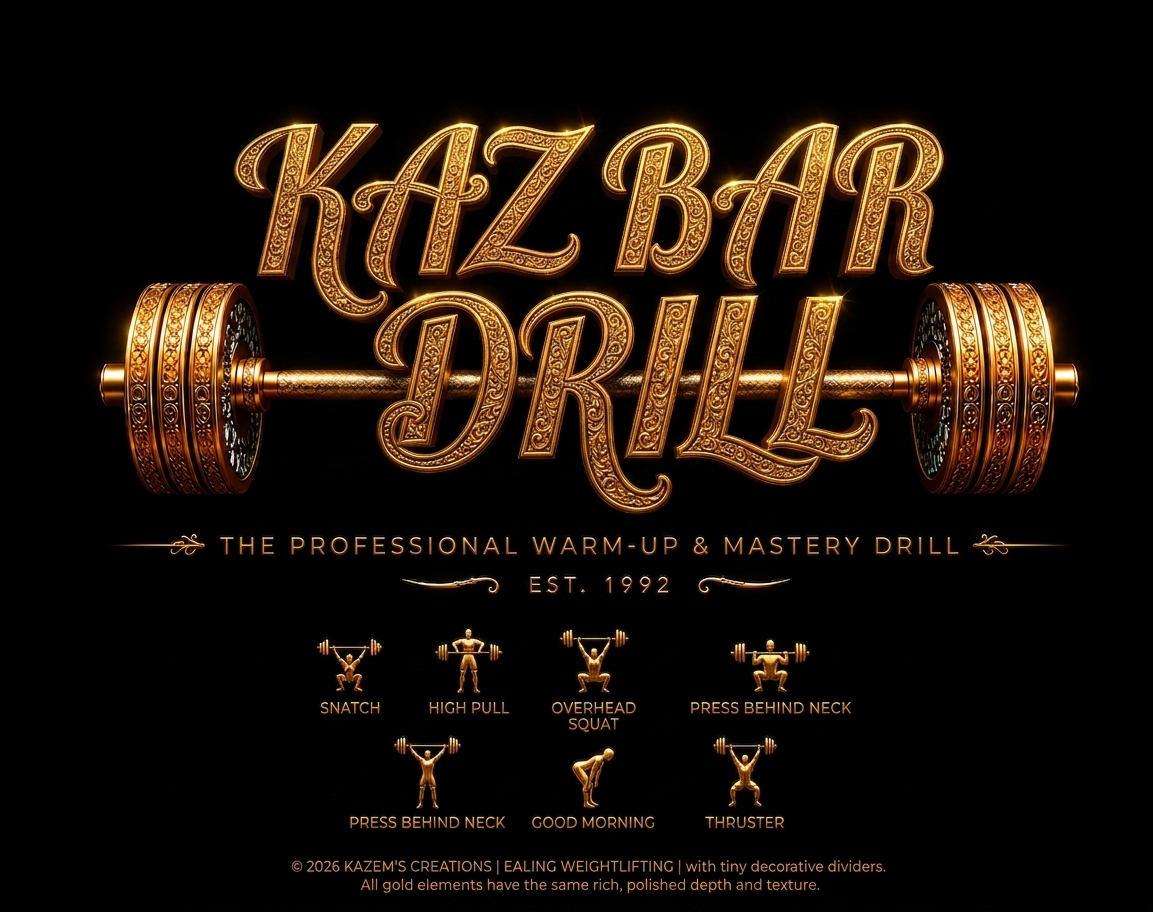
The Complete Olympic Warm-Up in Under Five Minutes
Work in progress, published articles, and what is coming next. Open any panel to read more.
A book in progress tracing every senior bodyweight category the sport has used from 1920 to 2028 — men, women, youth and Olympic classes — and what each reshuffle did to the athletes living through it.
Looking ahead to Los Angeles 2028. The IOC has approved an increase to six Olympic categories per gender for LA 2028, up from five in Paris. The IWF has also introduced a new eight-category World standard starting in 2026.
| Era | Men — Senior (kg) | Women — Senior (kg) |
|---|---|---|
| 1920–1972 Early Era | 5 categories 60, 67.5, 75, 82.5, +82.5 | Not yet official |
| 1972–1992 Classic Era | 10 categories 52, 56, 60, 67.5, 75, 82.5, 90, 100, 110, +110 | 9 categories (est. 1987) 44, 48, 52, 56, 60, 67.5, 75, 82.5, +82.5 |
| 1993–1997 First Reset | 10 categories 54, 59, 64, 70, 76, 83, 91, 99, 108, +108 | 9 categories 46, 50, 54, 59, 64, 70, 76, 83, +83 |
| 1998–2018 Sydney–Rio | 8 categories 56, 62, 69, 77, 85, 94, 105, +105 | 7 categories 48, 53, 58, 63, 69, 75, +75 |
| 2018–2024 Tokyo–Paris | 10 categories 55, 61, 67, 73, 81, 89, 96, 102, 109, +109 | 10 categories 45, 49, 55, 59, 64, 71, 76, 81, 87, +87 |
| From Jun 2025 Interim | 8 categories 60, 65, 71, 79, 88, 94, 110, +110 | 8 categories 48, 53, 58, 63, 69, 77, 86, +86 |
| From Aug 2026 World Standard | 8 categories 60, 65, 70, 75, 85, 95, 110, +110 | 8 categories 49, 53, 57, 61, 69, 77, 86, +86 |
| LA 2028 Olympic | 6 categories 65, 75, 85, 95, 110, +110 | 6 categories 53, 61, 69, 77, 86, +86 |
Chapter extract from the upcoming book, by Kazem Panjavi.
Weight categories are not just labels on paper. They shape everything — how an athlete eats, recovers, sleeps, trains, and feels on the platform. This is a first-hand account of what happens when a lifter is forced into the wrong class, and what becomes possible when the right one fits.
At the 1992 Barcelona Olympic Games Kazem competed at 67.5 kg — not his natural bodyweight. Making weight meant cutting to around 66.7 kg, which left him drained and unstable, and contributed to a serious shoulder injury. When the categories were reorganised and his class moved to 70 kg, the sport felt different: a 2.5 kg adjustment instead of a constant fight. It led to his best lifts — 140.5 kg snatch and 175 kg clean & jerk, recognised as a new Iranian record.
The story continues through his move to the UK in 1995, Best Lifter of the Year at the 1999 London Open, competing at 77 kg at the age of 37, and becoming British Champion in 2002 — clean & jerking 152.5 kg on one leg after injuring his knee earlier in the competition.
It has not stopped. He set a World Masters Games record in 2002 and was named Best Lifter at the 2025 World Masters Games. Alongside that he has taken lifters the whole way — from a first session to the Olympic platform in 2004 — and coached young lifters to World and European medals.
Experience the transformative power of Kazem Panjavi’s personalised training approach. Kazem’s expertise and guidance will propel you towards success, whether you aspire to compete at the highest level or simply want to elevate your fitness journey.
Don’t miss the opportunity to train with a true champion and unlock your full potential. Enrol now and embark on a fitness journey like no other.
KAZAPP on your phone — ten programmes, auto-regulated to how you turn up on the day.
An Excel plan that calculates and adjusts your training for you. Lower price than the app.
Your programme sent as a PDF — you keep track of it yourself. Lowest price of the three.
Many lifters have nobody to ask. Some train with no coach at all. Others work with a coach who is keen and well-intentioned, but whose qualification came entirely through an online course — someone who has not yet stood in a warm-up room, called an attempt, or taken a lifter through a competition.
That is not a criticism of the coach. It is a gap in the system. A course can teach the theory, but it cannot give you the years on the platform that let you see a fault as it happens, correct it in the moment, and tell an athlete honestly what competition day will feel like. Without that, lifters lose time to habits that take far longer to unlearn than to learn.
KAZ Easy Coach is being written to close it: a clear, step-by-step guide to teaching the lifts properly, from the first position through to the full movement. For the lifter with nobody to ask, it is a correct path to follow. For the newer coach, it is a structure built on 35 years, 1,300 athletes and an Olympic platform — not on theory.
In development. Details to follow.
Why this matters. International weightlifting sits behind institutional gates. National federations, the IWF and government sport bodies decide who competes, where, and under whose budget. Almost nobody stages a genuine international competition without that machinery behind them.
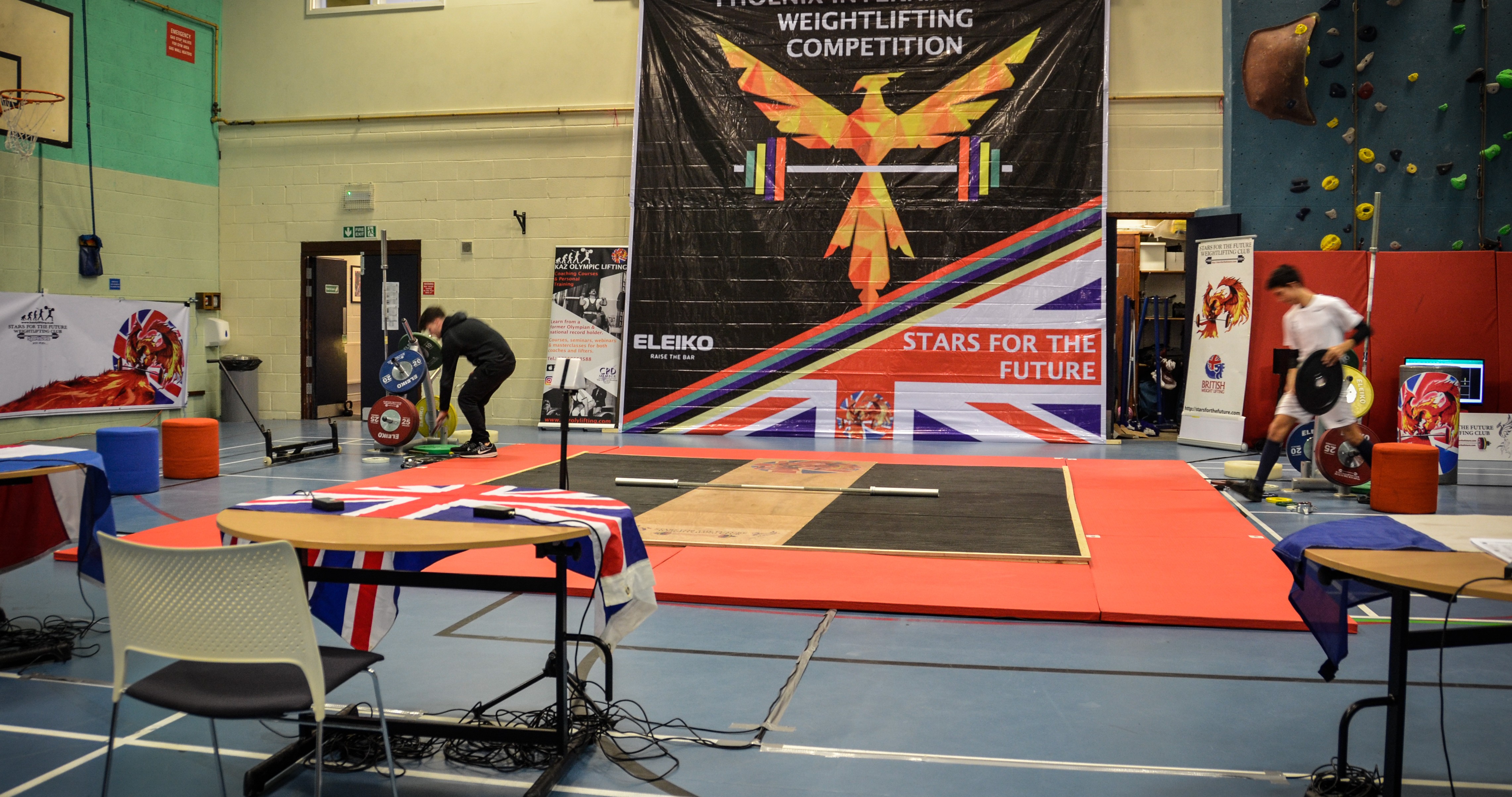
Four times, it was done anyway. The Phoenix Cup was organised single-handed, supported by Harrow School and Eleiko rather than by an NGB or public funding — and one edition earned a place on the official IWF calendar, bringing national teams from seven countries to a club in West London.
That is the credential behind everything on this page. The software, the app and the hardware were not designed from theory. They came from the person who had to run the clock, brief the referees, manage the warm-up room and answer for every decision on the day.
2014–2018. Four self-organised international competitions, run single-handed and supported by Harrow School and Eleiko — one reached the official IWF calendar.
Seven countries. National teams from Germany, Belgium and Sweden, plus France (two teams), Austria, Switzerland and India.
The proof. World-class competition can exist outside the institutions — built on one Olympian’s vision and expertise alone.
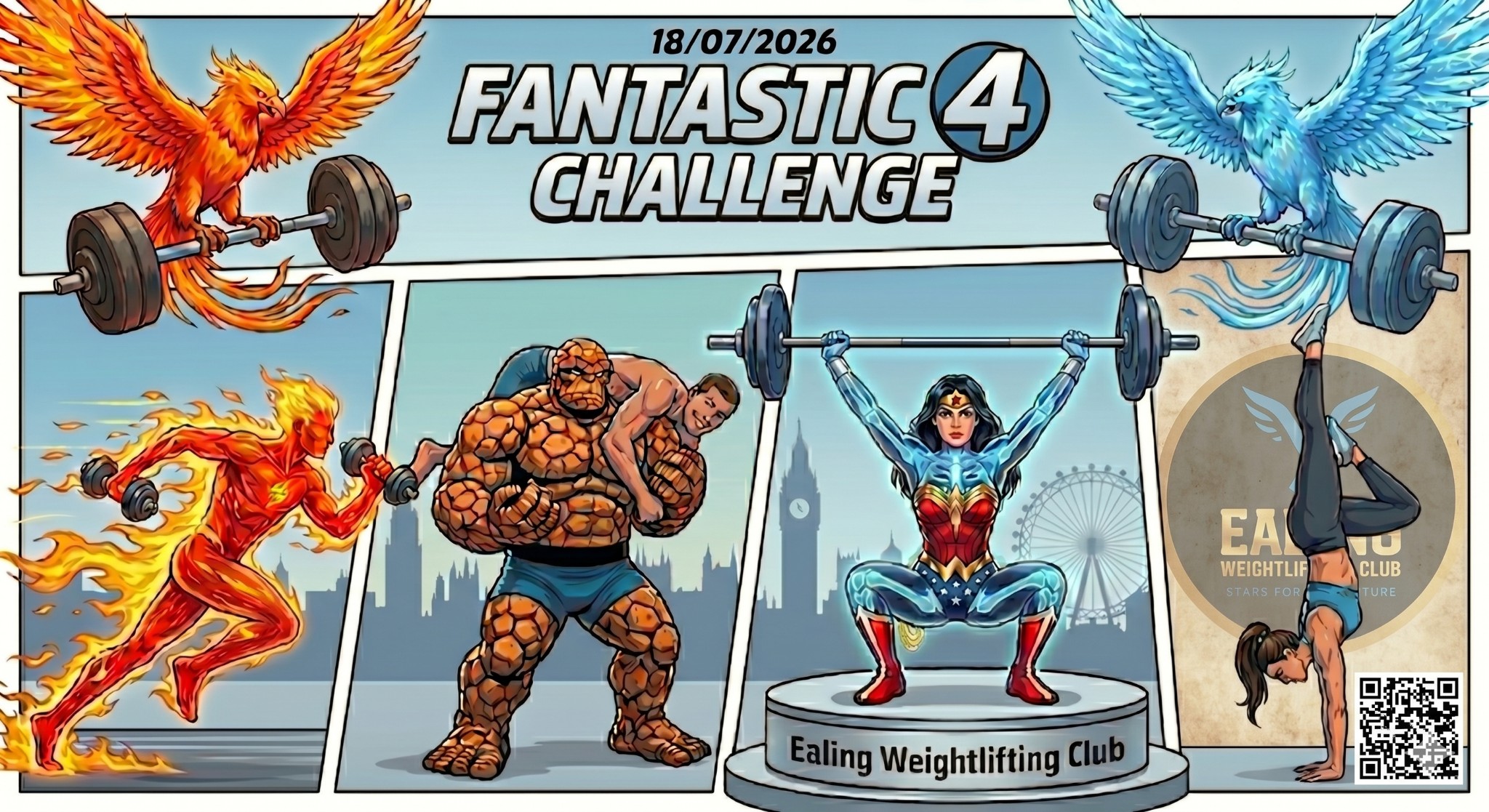
The next chapter. A permanent, recurring team event — the natural evolution of four editions of the Phoenix Cup.
One team, four generations. Different ages, genders and strengths lifting together as a single team, not as individuals.
Beyond the solo sport. Weightlifting built, organised and celebrated as a shared achievement at the highest competitive level.